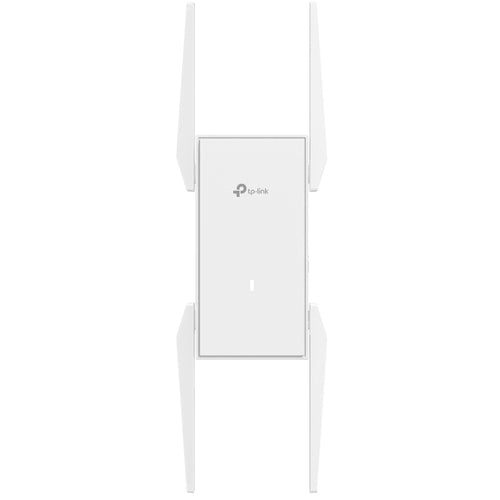
OTD500 - Teltonika OTD500 Outdoor 5G, 4G Cat19 Router with build in Antenna
Features
The OTD500 is a durable 5G outdoor router built for reliable connectivity in demanding environments. Its IP55-rated housing withstands harsh conditions, and the integrated mounting bracket enables quick, hassle-free installation. Dual SIM and eSIM with automatic switching provide exceptional network flexibility and redundancy. Gigabit Ethernet ports with PoE-in and PoE-out simplify setup by combining power and data in a single cable. Fully RMS-compatible, the OTD500 offers effortless remote management, making it perfect for outdoor connectivity solutions.
IP55
IP55 durability for outdoor deployment
CONNECTIVITY
5G, 4G Cat 19, 3G
eSIM™
Seamless connectivity with eSIM™ SGP.22
POE-IN/OUT
1 x PoE-in and 1 x PoE-out port
Specifications
Technical Specifications
| ETHERNET | 2 x ETH ports (can be configured as WAN), 10/100/1000 Mbps, compliance with IEEE 802.3, IEEE 802.3u, 802.3az standards, supports auto MDI/MDIX crossover |
|---|---|
| PoE ports | 1 x PoE In |
| PoE standards | 802.3af/at |
| PoE ports | 1 x PoE Out |
| PoE standards | 802.3af Alternative B |
| PoE Max Power per Port (at PSE) | 15 W Max (power supply unit dependent) |
| Routing | Static routing, Dynamic routing (BGP, OSPF v2, RIP v1/v2, EIGRP, NHRP), Policy based routing |
| Network protocols | TCP, UDP, IPv4, IPv6, ICMP, NTP, DNS, HTTP, HTTPS, FTP, SMTP, SSL v3, TLS, ARP, VRRP, PPP, PPPoE, UPNP, SSH, DHCP, Telnet, SMPP, SNMP, MQTT, Wake On Lan (WOL), VXLAN |
| VoIP passthrough support | H.323 and SIP-alg protocol NAT helpers, allowing proper routing of VoIP packets |
| Connection monitoring | Ping Reboot, Wget Reboot, Periodic Reboot, LCP and ICMP for link inspection |
| Firewall | Port forward, traffic rules, custom rules, TTL target customisation |
| Firewall status page | View all your Firewall statistics, rules, and rule counters |
| Ports management | View device ports, enable and disable each of them, turn auto-configuration on or off, change their transmission speed, and so on |
| Network topology | Visual representation of your network, showing which devices are connected to which other devices |
| DHCP | Static and dynamic IP allocation, DHCP relay, DHCP server configuration, status, static leases: MAC with wildcards |
| QoS / Smart Queue Management (SQM) | Traffic priority queuing by source/destination, service, protocol or port, WMM, 802.11e |
| DDNS | Supported >25 service providers, others can be configured manually |
| DNS over HTTPS | DNS over HTTPS proxy enables secure DNS resolution by routing DNS queries over HTTPS |
| Network backup | VRRP, Wired options, each of which can be used as an automatic Failover |
| Load balancing | Balance Internet traffic over multiple WAN connections |
| Hotspot | Captive portal (hotspot), internal/external Radius server, Radius MAC authentication, SMS authorisation, SSO authentication, internal/external landing page, walled garden, user scripts, URL parameters, user groups, individual user or group limitations, user management, 9 default customisable themes and optionality to upload and download customised hotspot themes |
| SSHFS | Possibility to mount remote file system via SSH protocol |
| VRF support | Initial virtual routing and forwarding (VRF) support |
| Traffic Management | Real-time monitoring, wireless signal charts, traffic usage history |
| Authentication | Pre-shared key, digital certificates, X.509 certificates, TACACS+, Internal & External RADIUS users authentication, IP & login attempts block, time-based login blocking, built-in random password generator |
| Firewall | Preconfigured firewall rules can be enabled via WebUI, unlimited firewall configuration via CLI, DMZ, NAT, NAT-T, NAT64 |
| Attack prevention | DDOS prevention (SYN flood protection, SSH attack prevention, HTTP/HTTPS attack prevention), port scan prevention (SYN-FIN, SYN-RST, X-mas, NULL flags, FIN scan attacks) |
| VLAN | Port and tag-based VLAN separation |
| Mobile quota control | Mobile data limit, customizable period, start time, warning limit, phone number |
| WEB filter | Blacklist for blocking out unwanted websites, Whitelist for specifying allowed sites only |
| Access control | Flexible access control of SSH, Web interface, CLI and Telnet |
| TPM | Identification and authentication module, TPM 2.0 standard |
| SSL certificate generation | Let's Encrypt and SCEP certificate generation methods |
| 802.1x | Port-based network access control server |
| OpenVPN | Multiple clients and a server can run simultaneously, 27 encryption methods |
| OpenVPN Encryption | DES-CBC 64, RC2-CBC 128, DES-EDE-CBC 128, DES-EDE3-CBC 192, DESX-CBC 192,BF-CBC 128, RC2-40-CBC 40, CAST5-CBC 128, RC2-64-CBC 64, AES-128-CBC 128, AES-128-CFB 128, AES-128-CFB1 128, AES-128-CFB8 128, AES-128-OFB 128, AES-128-GCM 128, AES-192-CFB 192, AES-192-CFB1 192, AES-192-CFB8 192, AES-192-OFB 192, AES-192-CBC 192, AES-192-GCM 192, AES-256-GCM 256, AES-256-CFB 256, AES-256-CFB1 256, AES-256-CFB8 256, AES-256-OFB 256, AES-256-CBC 256 |
| IPsec | XFRM, IKEv1, IKEv2, with 14 encryption methods for IPsec (3DES, DES, AES128, AES192, AES256, AES128GCM8, AES192GCM8, AES256GCM8, AES128GCM12, AES192GCM12, AES256GCM12, AES128GCM16, AES192GCM16, AES256GCM16) |
| GRE | GRE tunnel, GRE tunnel over IPsec support |
| PPTP, L2TP | Client/Server instances can run simultaneously, L2TPv3, L2TP over IPsec support |
| Stunnel | Proxy designed to add TLS encryption functionality to existing clients and servers without any changes in the program's code |
| DMVPN | Method of building scalable IPsec VPNs, Phase 2 and Phase 3 and Dual Hub support |
| SSTP | SSTP client instance support |
| ZeroTier | ZeroTier VPN client support |
| WireGuard | WireGuard VPN client and server support |
| Tinc | Tinc offers encryption, authentication and compression in it's tunnels. Client and server support. |
| Tailscale | Tailscale offers speed, stability, and simplicity over traditional VPNs. Encrypted point-to-point connections using the open source WireGuard protocol |
| Supported modes | Client, Server |
| Supported connection types | TCP |
| Supported modes | Server, Client |
| Supported connection types | TCP |
| Custom registers | MODBUS TCP custom register block requests, which read/write to a file inside the router, and can be used to extend MODBUS TCP Client functionality |
| Supported data formats | 8-bit: INT, UINT; 16-bit: INT, UINT (MSB or LSB first); 32-bit: float, INT, UINT (ABCD (big-endian), DCBA (little-endian), CDAB, BADC), HEX, ASCII |
| Protocol | HTTP(S), MQTT, Azure MQTT |
| Data to server | Extract parameters from multiple sources and different protocols, and send them all to a single server; Custom LUA scripting, allowing scripts to utilize the router's Data to server feature |
| Modbus MQTT Gateway | Allows sending commands and receiving data from MODBUS Server through MQTT broker |
| Supported modes | Station, Outstation |
| Supported connection | TCP |
| DLMS Support | DLMS - standard protocol for utility meter data exchange |
| Supported modes | Client |
| Supported connection types | TCP |
| COSEM | Allows to scan meter COSEM objects for automatic detection and configuration |
| Connector | RJ45 Socket |
| Input voltage range | 42.5-57.0 VDC, reverse polarity protection, voltage surge/transient protection |
| Input voltage range for PoE | 42.5-57.0 VDC, reverse polarity protection, voltage surge/transient protection |
| Power consumption | Idle: < 2.5 W / Max: < 9 W / PoE Max < 24 W |
| Ethernet | 2 x RJ45 ports, 10/100/1000 Mbps |
| Status LEDs | 3 x Mobile connection type, 3 x Mobile connection strength, 4 x ETH status LEDs |
| SIM | 2 x SIM slots (Mini SIM - 2FF), 1.8 V/3 V |
| Power | RJ45, PoE In, 42.5 - 57.0 VDC |
| Antennas | 4 x internal antennas |
| Antennas specifications | 4 x 617 - 960 / 1695 - 2690 / 3300 - 4200 / 4200 - 5000MHz, 50 O, VSWR <3.5, gain <4.9 dBi, omnidirectional |
| Reset | Reboot/User default reset/Factory reset button |
| Casing material | Plastic (PC+ASA) |
| Dimensions (W x H x D) | 110 x 49.30 x 235 mm |
| Weight | 385 g |
| Mounting options | Mounting bracket (for vertical flat surface or pole mounting) |
| Operating temperature | -40 °C to 55 °C |
| Operating humidity | 10% to 90% non-condensing |
| Ingress Protection Rating | IP55 |
| Brand | Teltonika |
|---|---|
| Product Type | Networking > Network Accessories > Antennas |
| Weight | 0.6 kg |
| Warranty |
|---|
Note:
Warranty period is as stated above unless the manufacturer has chosen to specify a longer period.
All warranties are return to base unless otherwise specified.
Shipping Information
- Free NZ-wide shipping on orders over $299
- Standard delivery 2–5 business days
- Rural delivery may take an additional 1–2 days
- Same-day dispatch for orders placed before 2pm (weekdays)
Returns Policy
- 7-day returns on unused items in original packaging
- Faulty or damaged products covered under warranty
- Contact our support team to initiate a return